When the kitchen turned into a smoky battlefield, I realized I needed a recipe that could save the day. A burnt skillet, a splattering of olive oil, and the faint scent of overcooked cod had me convinced that culinary disasters were inevitable. The moment the smoke alarm blared, I felt a rush of panic that was quickly replaced by a spark of determination. I knew I had to find a dish that would turn a kitchen mishap into a triumph of flavor and texture. This was the genesis of a pan‑seared cod that would not only rescue the evening but also redefine what “simple” could mean.
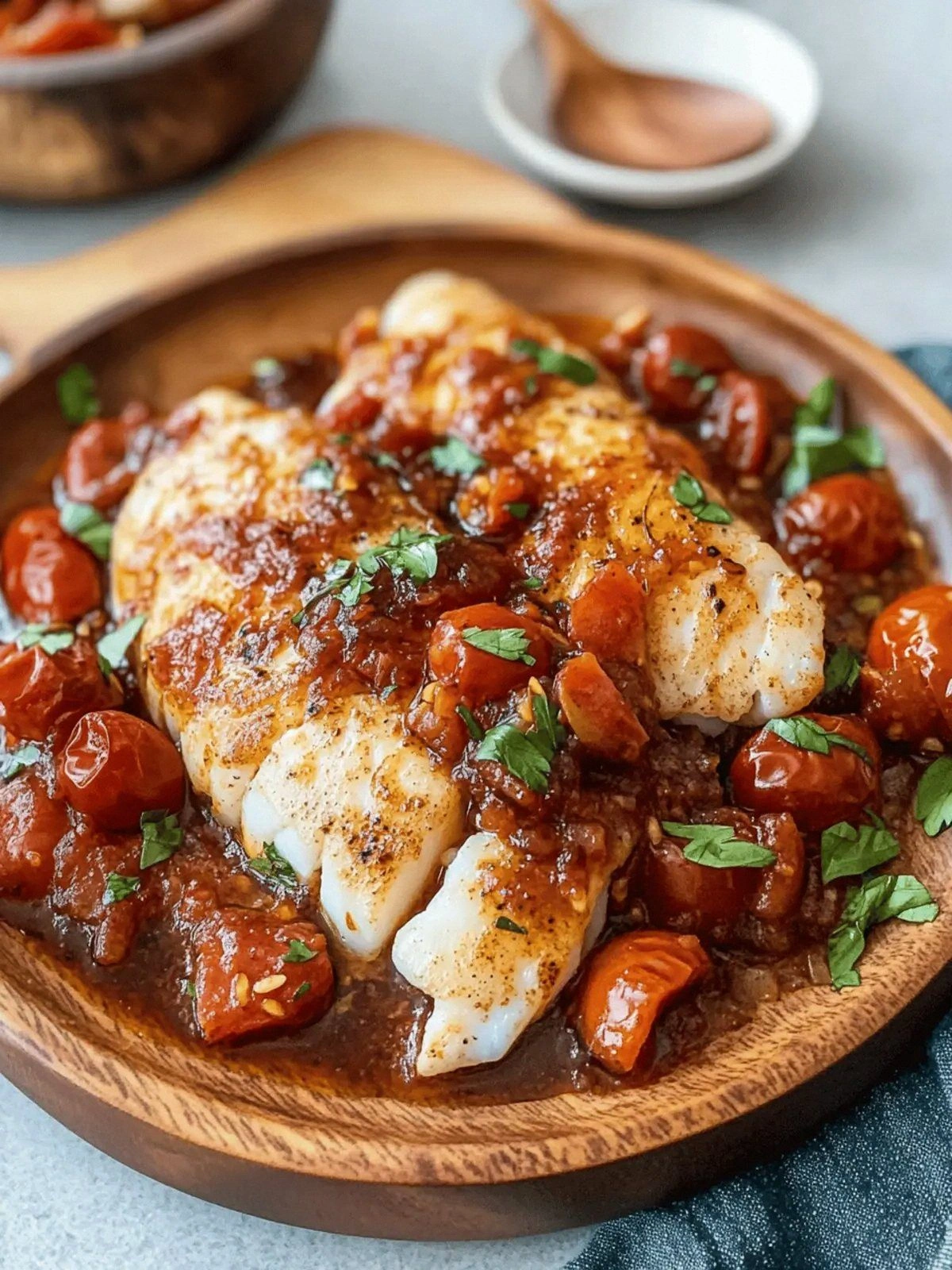
Picture this: a plate of perfectly seared cod, its golden crust crackling like a sunrise, drizzled with a glossy balsamic‑tomato sauce that glistens like liquid amber. The aroma rises, mingling with the sweet scent of honey and the earthy whisper of rosemary. As you take a bite, the fish is buttery and flaky, the sauce coats the surface like velvet, and a hint of citrus lingers on the tongue. The sound of the first bite is a satisfying crack, the texture a contrast of crisp and tender that makes your mouth water. It’s a sensory experience that turns an ordinary meal into a moment of pure culinary bliss.
What makes this version stand out is not just the combination of flavors but the meticulous attention to technique and ingredient quality. I’ve stripped away the fluff, focusing on the essential elements that elevate cod from a humble fish to a star of the table. The sauce is a masterful balance of acidity and sweetness, the crust is a caramelized caramel that locks in moisture, and the finish is a bright burst of basil that lifts the entire dish. I’ve discovered that the secret lies in the small details—how the oil is heated, how the fish is seasoned, and how the sauce is reduced. The result is a dish that feels indulgent yet approachable, sophisticated yet comforting.
But here’s the twist that will make you stop scrolling: a single splash of balsamic vinegar, reduced to a syrupy glaze, transforms the entire plate. It’s not just a sauce; it’s a narrative of caramelized sugar and vinegary tang that speaks to the heart of Mediterranean cooking. This technique will have you asking, “Why didn’t I think of that sooner?” The answer is simple: because you’ve never tried it. And now, with this recipe, you’re about to discover why this is hands down the best version you’ll ever make at home.
I dare you to taste this and not go back for seconds, because once you’ve experienced the silky texture and the burst of flavor, you’ll find yourself craving the next bite. I’m not exaggerating—this dish is a game‑changer, a culinary revelation that will have your guests asking for the recipe long after the last forkful. And if you’ve ever struggled with getting the fish just right, you’re not alone. I’ve got the fix, and it’s right here in this post. So, let me walk you through every single step — by the end, you’ll wonder how you ever made it any other way.
What Makes This Version Stand Out
- Flavor Profile: The sauce balances the sweetness of honey with the sharpness of balsamic vinegar, creating a complex yet harmonious taste that elevates the mild cod. The addition of rosemary and garlic adds depth, while basil brings a fresh, aromatic finish.
- Texture: The seared crust is a caramelized masterpiece, crisp on the outside and tender on the inside, thanks to precise timing and oil temperature. The sauce coats the fish like a silky blanket, enhancing every bite.
- Simplicity: With only a handful of ingredients, this dish is quick to assemble, yet it delivers a gourmet experience. No fancy equipment or obscure spices are required.
- Crowd Appeal: Whether you’re feeding a family or entertaining guests, the dish’s visual appeal and robust flavor make it a guaranteed hit. It’s the kind of recipe that gets people talking.
- Ingredient Quality: Fresh cod, ripe cherry tomatoes, and high‑quality balsamic vinegar are the pillars of this dish. Each component is chosen for its flavor profile and texture, ensuring a harmonious result.
- Make‑Ahead Potential: The sauce can be prepared in advance and reheated gently, while the cod can be seared fresh right before serving. This flexibility makes it perfect for busy weeknights.
Alright, let’s break down exactly what goes into this masterpiece…
Inside the Ingredient List
The Flavor Base
At the heart of this dish is the sauce, a marriage of tomato sweetness and balsamic tang. The cherry tomatoes provide a burst of natural juice that forms the sauce’s foundation. When you break them open, their juice mingles with the balsamic vinegar, creating a reduction that’s both sweet and acidic. Skipping the tomatoes would leave the sauce flat and uninteresting.
The balsamic vinegar is the secret weapon that adds depth. Its natural sweetness balances the acidity of the tomatoes, while its complex flavor profile introduces subtle notes of oak and fruit. If you’re short on time, a splash of red wine vinegar can mimic the acidity, but the balsamic will give you that signature depth.
Honey is the sweetener that ties everything together. It caramelizes slightly during the reduction, creating a glossy glaze that clings to the cod. If you prefer a less sweet version, reduce the honey by half or replace it with a touch of maple syrup for a different nuance.
Garlic cloves add aromatic warmth that permeates the sauce and the fish. They’re the unsung hero that elevates the dish from good to unforgettable. If you’re not a fan of garlic, a pinch of garlic powder can still provide that flavor kick, though the fresh cloves give a more vibrant taste.
The Texture Crew
The cod fillets are the star of the show, and their texture hinges on proper seasoning and searing. Fresh cod should be firm to the touch, with a mild scent. If you’re using frozen fillets, thaw them completely to avoid uneven cooking.
All‑purpose flour is the secret to a crisp crust. It absorbs excess moisture and creates a golden brown exterior. A pinch of ground black pepper adds subtle heat without overpowering the fish’s delicate flavor.
Olive oil is used in two stages: one tablespoon for the sauce and two tablespoons for searing. The extra oil ensures the fish doesn’t stick and allows it to develop a beautiful sear. If you’re looking to cut calories, a light spray of cooking oil will still work, but you’ll lose some of the depth of flavor.
The Unexpected Star
Bay leaf is a subtle enhancer that infuses the sauce with a hint of herbal earthiness. It’s often overlooked, but its aroma can elevate a simple tomato sauce into something more complex. Remove it before serving; it’s meant for cooking only.
Dried rosemary adds a fragrant, piney note that pairs beautifully with the fish. It’s a small amount—just a quarter teaspoon—so it doesn’t overpower the other flavors. Fresh rosemary could also be used, but the dried version offers a more concentrated taste.
The Final Flourish
Basil leaves are the final touch that brightens the dish. They’re added at the very end to preserve their fresh, peppery aroma. A handful of leaves will do; too many can make the sauce bitter.
Salt and pepper are the universal seasoning that bring everything together. They’re added at different stages to balance the flavors and ensure the fish isn’t bland. A pinch of salt is enough; the rest of the salt comes from the cod and the sauce.
Everything’s prepped? Good. Let’s get into the real action…
The Method — Step by Step
- Step 1: Pat the cod fillets dry with paper towels until they’re almost completely dry. This ensures a crisp sear. Sprinkle the fillets with a pinch of salt, a pinch of ground black pepper, and lightly dust them with flour. The flour will help create a golden crust once it hits the pan. Let the fillets rest for a few minutes while you prepare the sauce.
- Step 2: In a medium saucepan, heat one tablespoon of olive oil over medium heat. Add the minced garlic and sauté until fragrant, about 30 seconds. Then toss in the cherry tomatoes, breaking them slightly with a spoon. Cook until the tomatoes soften and start to release their juices, about 5 minutes. This will form the base of your sauce.
- Step 3: Add the balsamic vinegar, honey, dried rosemary, and bay leaf to the saucepan. Reduce the heat to low and let the mixture simmer for 8–10 minutes, stirring occasionally. The sauce should thicken and develop a glossy sheen. The reduction will concentrate the flavors, turning the sauce into a velvety glaze that will coat the cod perfectly.
- Step 4: Once the sauce has thickened, remove the bay leaf and stir in a splash of water to thin it slightly if it’s too thick. Taste and adjust the seasoning with a pinch of salt and pepper. Set the sauce aside and keep it warm on very low heat.
- Step 5: Place the cod fillets in the hot skillet, skin side down if applicable. Sear for 3–4 minutes on each side, or until the flesh turns opaque and the edges start to pull away from the pan. The crust should be a deep golden brown. Flip the fillets gently with a spatula to avoid breaking them.
- Step 6: Remove the cod from the skillet and let it rest on a plate for a minute. This allows the juices to redistribute, keeping the fish moist and tender. While it rests, pour the warm sauce over the fillets, ensuring each piece gets a generous coating.
- Step 7: Finish the dish by scattering fresh basil leaves over the top. The basil’s bright aroma and peppery flavor will lift the entire plate. Serve immediately, letting the sauce’s glossy sheen shine against the vibrant green of the basil.
That’s it — you did it. But hold on, I’ve got a few more tricks that’ll take this to another level. These insider tips will ensure your dish is flawless every time and will impress even the most discerning palate.
Insider Tricks for Flawless Results
The Temperature Rule Nobody Follows
Many cooks think medium‑high heat is enough for searing, but the truth is that a hotter pan creates a superior crust. Aim for a temperature where oil shimmers just before the fish touches the surface. If the oil starts to smoke, reduce the heat slightly. This small adjustment can mean the difference between a golden sear and a greasy mess.
Why Your Nose Knows Best
When you’re cooking, trust your nose. The moment the sauce starts to bubble and the tomatoes release their juice, you know it’s ready. The aroma will be sweet, slightly acidic, and fragrant. If you wait too long, the sauce will reduce too much and become too thick, losing its glossy sheen.
The 5-Minute Rest That Changes Everything
After searing, let the cod rest for exactly five minutes before serving. This short pause allows the internal temperature to even out, ensuring the fish stays moist. It also gives the sauce a chance to coat the fillets evenly, creating a harmonious blend of flavors.
The Right Salt Balance
Salt is the silent hero of this dish. Too much, and the fish becomes briny; too little, and it tastes flat. A pinch of salt on the fillets and a pinch in the sauce is enough to enhance the natural flavors. If you’re using a low‑sodium fish stock, increase the salt slightly in the sauce.
The Secret Ingredient
A splash of lemon juice at the end of cooking brightens the sauce and cuts through the richness of the olive oil. The acidity balances the sweetness of honey and the depth of balsamic vinegar. Add a few drops right before plating, and the dish will feel fresh and lively.
Creative Twists and Variations
This recipe is a playground. Here are some of my favorite ways to switch things up:
Mediterranean Marinade
Swap the olive oil in the sauce for a splash of white wine, add a handful of Kalamata olives, and finish with chopped parsley. The result is a briny, herbaceous dish that’s perfect for summer gatherings.
Spicy Kick
Add a pinch of red pepper flakes to the sauce for a subtle heat that complements the honey’s sweetness. This variation is great for those who like a little bite without overwhelming the delicate cod.
Smoky Pineapple
Introduce diced pineapple to the sauce for a tropical twist. The pineapple’s natural sugars caramelize during the reduction, giving the glaze a sweet, smoky flavor that pairs beautifully with the fish.
Herb‑Infused Oil
Infuse the olive oil with fresh thyme and bay leaves before searing the cod. The oil takes on a subtle herbal aroma that adds depth to every bite. Drain the herbs before serving for a clean finish.
Citrus Zest
Grate fresh orange zest into the sauce just before plating. The citrus adds brightness and a fragrant note that lifts the entire dish. This variation works well with a side of roasted vegetables.
Storing and Bringing It Back to Life
Fridge Storage
Store the cooked cod and sauce separately in airtight containers. The fish will keep for up to 2 days, while the sauce can last 3 days. When ready to reheat, combine them gently to avoid overcooking the fish.
Freezer Friendly
Freeze the cod fillets in a single layer on a parchment‑lined tray before transferring to a freezer bag. The sauce can also be frozen; thaw overnight in the fridge before reheating. This method preserves the texture and flavor.
Best Reheating Method
Reheat the sauce in a small saucepan over low heat, adding a splash of water if it’s thickened. Warm the fish gently in a skillet or microwave, covering with foil to retain moisture. A tiny splash of water before reheating steams the fish back to perfection.