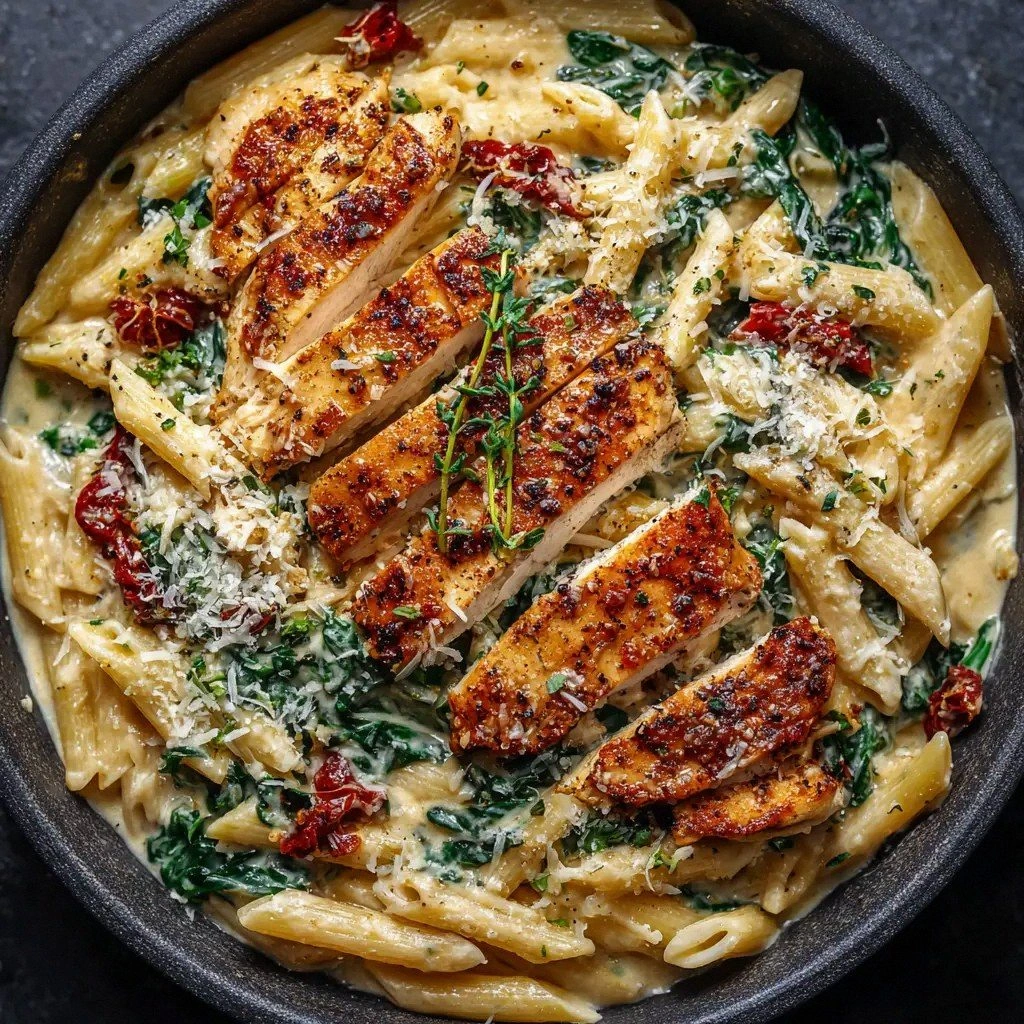
I was halfway through a disastrous week of overcooked chicken and soggy pasta when my roommate, who thinks she’s a culinary wizard, dared me to make something that would actually taste good. I stared at the bland pot of noodles and the chicken that had lost its flavor in a sea of bland broth. That night, I promised myself that if I could turn that mess into something edible, I would share the recipe with the world. The result? A creamy, sun‑dried tomato‑laden dish that feels like a warm hug on a rainy evening.
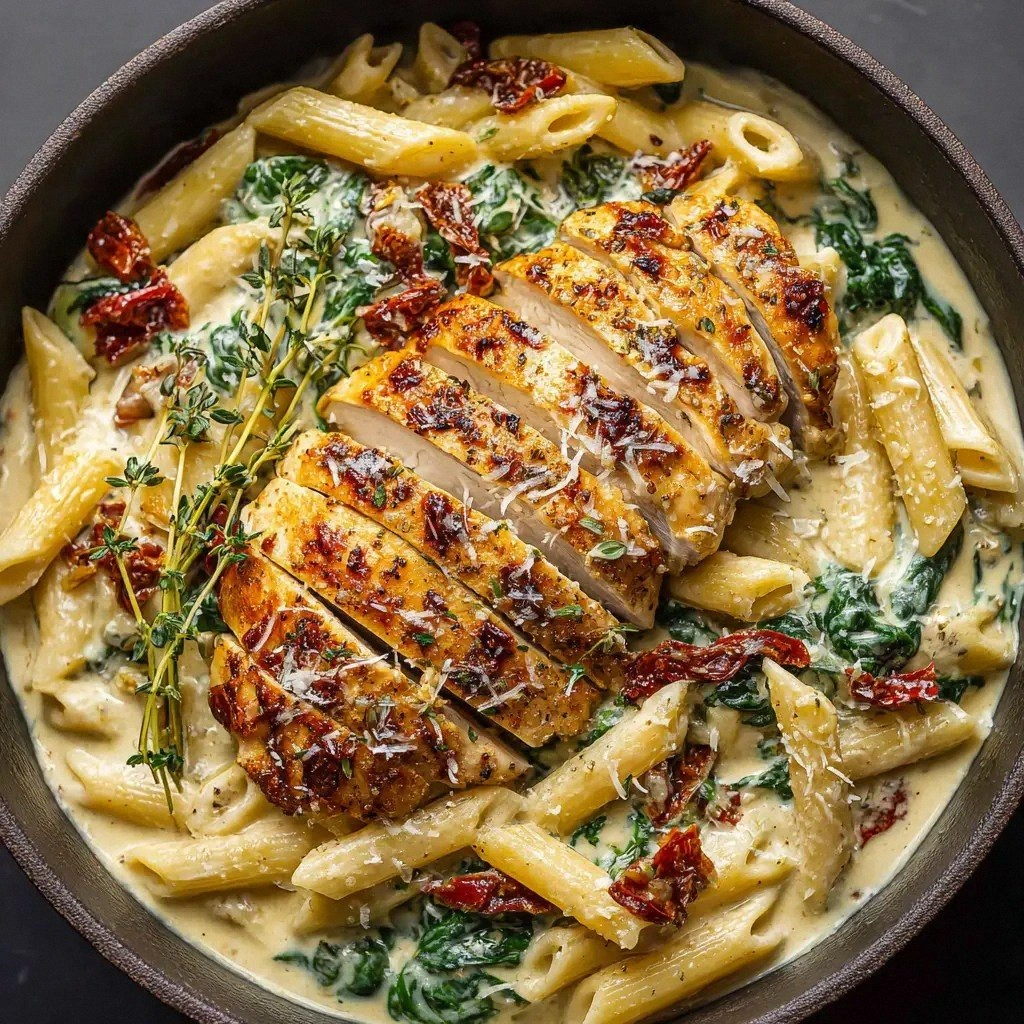
Imagine the scent of garlic sizzling in olive oil, the gentle hiss as the chicken browns to a golden crust, and the instant, velvety sheen of heavy cream coating every strand of pasta. The sound of a spoon scraping the bottom of the pan is a subtle reminder that the sauce is thickening just right. The first bite is a burst of savory, slightly sweet tomato, a tangy kick from the red pepper flakes, and a whisper of basil that lifts the entire dish. The texture is a delightful contrast: tender chicken, al dente pasta, and a silky sauce that clings to each noodle like a velvet blanket.
What makes this version stand out is that it’s not just a variation on a classic; it’s a reimagining that turns a simple meal into an experience. The combination of sun‑dried tomatoes and Parmesan creates a depth of flavor that ordinary marinara never achieves. The cream adds a luxurious mouthfeel without drowning the dish in heaviness. The chicken is cooked to perfection—juicy on the inside with a crispy exterior that shatters like thin ice when you bite. The result is a dish that is both comforting and sophisticated, making it a go-to for both weeknight dinners and special occasions.
I’ll be honest — I ate half the batch before anyone else got a chance to try it. I dare you to taste this and not go back for seconds. But the real secret is a technique I learned from a chef who taught me to finish the sauce in the pan instead of the pot, which keeps the flavor concentrated. Picture yourself pulling this out of the pan, the whole kitchen smelling incredible, and the steam curling around the plate like a cloud. Let me walk you through every single step — by the end, you’ll wonder how you ever made it any other way.
What Makes This Version Stand Out
- Flavor Depth: Sun‑dried tomatoes bring a sweet, umami punch that lifts the sauce, while Parmesan adds a nutty richness that lingers on the palate.
- Texture Contrast: The chicken’s seared edges create a crisp bite that contrasts with the silky sauce and al dente pasta.
- Ingredient Quality: Using high‑quality sun‑dried tomatoes in oil preserves their natural oils, giving the dish a glossy finish.
- Cooking Method: Finishing the sauce in the pan locks in the aromas and keeps the sauce from separating.
- Ease of Prep: The recipe requires minimal chopping and a single pan, making it a breeze even after a long day.
- Make‑Ahead Potential: The sauce can be prepared ahead of time and reheated without losing its creamy texture.
- Versatility: Swap the chicken for shrimp, sausage, or tofu to adapt the dish to any dietary preference.
- Crowd‑Pleaser: The rich, comforting flavor profile is guaranteed to win over even the most skeptical diners.
Inside the Ingredient List
The Flavor Base
Olive oil: This isn’t just a cooking medium; it’s the first layer of flavor that carries the garlic and later the sun‑dried tomatoes. A splash of extra‑virgin olive oil gives the dish a bright, fruity undertone that balances the richness of the cream. If you’re looking for a lighter version, replace it with avocado oil, which has a higher smoke point and a neutral taste.
Garlic: Fresh cloves bring a sharp bite that mellows into sweet undertones as they caramelize. Don’t skip the garlic; it’s the backbone of the sauce. If you’re sensitive to garlic, use a smaller amount or opt for garlic powder, but the fresh flavor is irreplaceable.
Italian seasoning: A blend of oregano, basil, thyme, and rosemary adds depth without overwhelming the dish. A pinch of dried basil can be swapped for fresh to keep the flavor bright. Remember, a little goes a long way—too much can dominate the other ingredients.
The Texture Crew
Chicken breasts: The protein is the star of the show. Sear the chicken first to lock in juices and then finish cooking in the sauce to keep it tender. For an extra crispy edge, let the chicken rest for a few minutes before slicing; the surface will stay crispier.
Pasta: I use a sturdy rigatoni that holds sauce well, but any short pasta works. Cook the pasta al dente to avoid a mushy finish, and reserve a cup of pasta water to adjust the sauce’s consistency if needed.
The Unexpected Star
Sun‑dried tomatoes in oil: These are the secret weapon that delivers a concentrated tomato flavor and a subtle sweetness. If you can’t find them, try sun‑dried tomatoes that have been dried in the sun (without oil) and rehydrate them in warm water before adding.
Red pepper flakes: A whisper of heat that keeps the dish from feeling flat. For a milder version, reduce the flakes or use a pinch of cayenne pepper instead.
The Final Flourish
Heavy cream: The creamy base that gives the sauce its luxurious mouthfeel. For a lighter version, substitute half‑and‑half or a dairy‑free cream alternative. The cream’s fat content also helps emulsify the sauce and keep it from separating.
Parmesan cheese: Freshly grated Parmesan adds a savory, slightly nutty finish. If you’re lactose intolerant, use a vegan parmesan alternative, but be aware that the flavor profile will shift slightly.
Basil: Fresh basil is the final touch that brightens the dish. Toss in a handful of leaves right before serving to keep the color vibrant and the aroma alive.
Everything's prepped? Good. Let's get into the real action...
The Method — Step by Step
- Heat a large skillet over medium‑high heat and add 1 tablespoon of olive oil. Let the oil shimmer, but don’t let it smoke. This is the first step that sets the flavor foundation. Once the oil is hot, add the chicken breasts and sear them on both sides until they develop a golden crust, about 3–4 minutes per side. The sear locks in juices and gives the chicken a delightful crunch. When the chicken is done, remove it from the skillet and set it aside on a plate.
- In the same skillet, reduce the heat to medium and add the minced garlic. Stir constantly to prevent burning, as garlic can go bitter quickly. You should hear a faint sizzle and smell a sweet, aromatic aroma. Let the garlic cook for about 30 seconds, just until fragrant. This short sauté releases essential oils that will infuse the sauce. Don’t rush this step; a slow cook ensures maximum flavor without bitterness.
- Add the sun‑dried tomatoes, chopped into bite‑sized pieces, and cook for another minute to toast them slightly. This brings out their natural sweetness and adds a subtle smokiness. The tomatoes will release a bit of their oil, which mixes with the garlic and oil, creating a rich base. Keep the heat moderate to avoid burning the tomatoes. If you like a bit more caramelization, let them brown for an extra 30 seconds.
- Pour in 1/2 cup of chicken broth, scraping up any browned bits from the bottom of the skillet. The broth adds depth and helps dissolve the tomato paste. Let the mixture simmer for 2 minutes, allowing the flavors to meld. Watch for the broth to reduce slightly; this concentrates the taste. The broth also helps create a silky sauce base before adding cream. If the mixture looks too thick, add a bit more broth or pasta water.
- Lower the heat to medium‑low and stir in 1 cup of heavy cream. The cream should swirl into the broth, creating a smooth, glossy sauce. Keep the heat low to prevent the cream from curdling. Stir continuously for 1–2 minutes until the sauce thickens to coat the back of a spoon. The cream adds a luxurious mouthfeel and balances the acidity of the tomatoes. If you prefer a lighter sauce, replace the heavy cream with half‑and‑half.
- Return the seared chicken breasts to the skillet, nestling them into the sauce. Spoon some sauce over each piece to ensure even coverage. Let the chicken simmer in the sauce for 4–5 minutes, or until the internal temperature reaches 165°F. The sauce will thicken slightly, and the chicken will absorb the flavors. If the sauce becomes too thick, add a splash of pasta water to reach your desired consistency. This step ensures the chicken stays tender and juicy.
- Add 1/2 cup of grated Parmesan cheese to the skillet and stir until it melts into the sauce, creating a silky, nutty finish. The cheese not only enriches the flavor but also thickens the sauce slightly. Allow the mixture to simmer for another minute to let the cheese fully integrate. If the sauce feels too thick, drizzle a bit of the reserved pasta water to loosen it. The Parmesan should give the sauce a subtle umami boost.
- Stir in 1/4 cup of fresh basil leaves, letting them wilt just before serving. The basil adds a fresh, herbal brightness that cuts through the richness. Toss the cooked pasta directly into the skillet, using tongs to coat each noodle evenly with the sauce. Let the pasta simmer in the sauce for 1–2 minutes so it absorbs the flavors. The final dish should be creamy, aromatic, and slightly glossy, with the basil leaves scattered throughout. Plate immediately for the best texture.
That's it — you did it. But hold on, I've got a few more tricks that'll take this to another level...
Insider Tricks for Flawless Results
The Temperature Rule Nobody Follows
The sauce’s texture hinges on the temperature. Keep the heat low after adding the cream to avoid curdling. A good rule of thumb is to keep the skillet at a gentle simmer, not a rolling boil. If you notice the sauce separating, lower the heat immediately and stir vigorously. This simple adjustment ensures a silky finish every time.
Why Your Nose Knows Best
As the sauce simmers, your nose will tell you when it’s ready. A sharp, buttery aroma signals that the cream has melded with the tomatoes. If the scent feels flat, let it cook a bit longer. Trusting your senses is often the fastest way to avoid overcooking or underseasoning.
The 5-Minute Rest That Changes Everything
Letting the dish rest for 5 minutes after cooking allows the flavors to settle. The sauce will thicken slightly, making it easier to coat each noodle. During this rest, the basil leaves will release their oils, giving the dish a fragrant finish. This small pause can elevate a good dish to great.
Use the Right Pasta Shape
Short, ridged pastas like rigatoni or penne are ideal because they hold sauce better. If you prefer a lighter bite, choose a long pasta like spaghetti, but be sure to toss it in the sauce right before serving to avoid sticking. The pasta shape can change the entire eating experience.
Keep the Chicken Juicy
Sear the chicken at a high temperature before simmering it in the sauce. This technique creates a caramelized crust that locks in moisture. If you’re using pre‑cooked chicken, add it in the last 2 minutes to warm it without drying it out.
Finish with Fresh Herbs
Adding fresh basil at the very end preserves its bright flavor and color. If you’re using dried herbs, sprinkle them in earlier, as they need time to rehydrate and release their flavor. Fresh herbs add a layer of complexity that dry herbs can’t match.
Creative Twists and Variations
This recipe is a playground. Here are some of my favorite ways to switch things up:
Spinach & Feta Edition
Swap the basil for a handful of fresh spinach and finish with crumbled feta. The spinach wilts into the sauce, adding a subtle earthiness, while the feta offers a salty counterpoint. This version is perfect for a Mediterranean twist.
Spicy Cajun Chicken
Add a tablespoon of Cajun seasoning to the chicken before searing and a pinch of cayenne to the sauce. The result is a smoky, spicy dish that pairs beautifully with a crisp white wine. The heat balances the creaminess of the sauce.
Vegetarian Mushroom Delight
Replace the chicken with sautéed mushrooms and add a splash of white wine before the cream. The earthy mushrooms absorb the sauce and create a hearty, plant‑based dish that feels indulgent. This variation works great for a cozy night in.
Greek Yogurt Finish
Stir in a dollop of Greek yogurt at the end for a tangy, protein‑rich finish. The yogurt also lightens the sauce, making it a little less heavy. This twist is ideal for those who want a healthier version without compromising on flavor.
Smoked Salmon Surprise
Add thin slices of smoked salmon in the last minute of cooking. The salmon’s smoky flavor complements the creamy sauce and adds a luxurious touch. Serve with a squeeze of lemon for brightness.
Almond Crumble Topping
Toast sliced almonds in a dry skillet until golden and sprinkle them over the finished dish. The almonds add a crunchy contrast to the creamy pasta and a nutty flavor that pairs well with the Parmesan. This topping gives the dish a delightful textural layer.
Storing and Bringing It Back to Life
Fridge Storage
Store the dish in an airtight container for up to 3 days in the refrigerator. Make sure the sauce is fully cooled before sealing to prevent condensation. When you’re ready to eat, reheat on low, adding a splash of water or broth to keep the sauce silky.
Freezer Friendly
The sauce and pasta can be frozen separately. Place the pasta in a freezer‑safe bag and the sauce in a separate container. Freeze for up to 2 months. This method preserves the sauce’s texture and prevents the pasta from becoming mushy.
Best Reheating Method
Reheat the dish in a skillet over medium heat, stirring frequently. Add a tablespoon of water or broth to loosen the sauce. Heat until the pasta is hot and the sauce is bubbling. The key is gentle, steady heat to avoid scorching the bottom.