I remember the night my friend dared me to turn a plain chuck roast into something that could make the entire house smell like a Korean market on a summer evening. I was skeptical, but the aroma of sizzling onions in the kitchen had me hooked even before I read the recipe. The moment the meat hit the pan, the sizzling sound was like a drumbeat announcing a feast. That single click of the skillet was the spark that turned a simple dinner into a culinary adventure. The kitchen was buzzing, the air thick with the scent of soy sauce and sesame oil, and my eyes were glued to the screen, waiting for the next step.
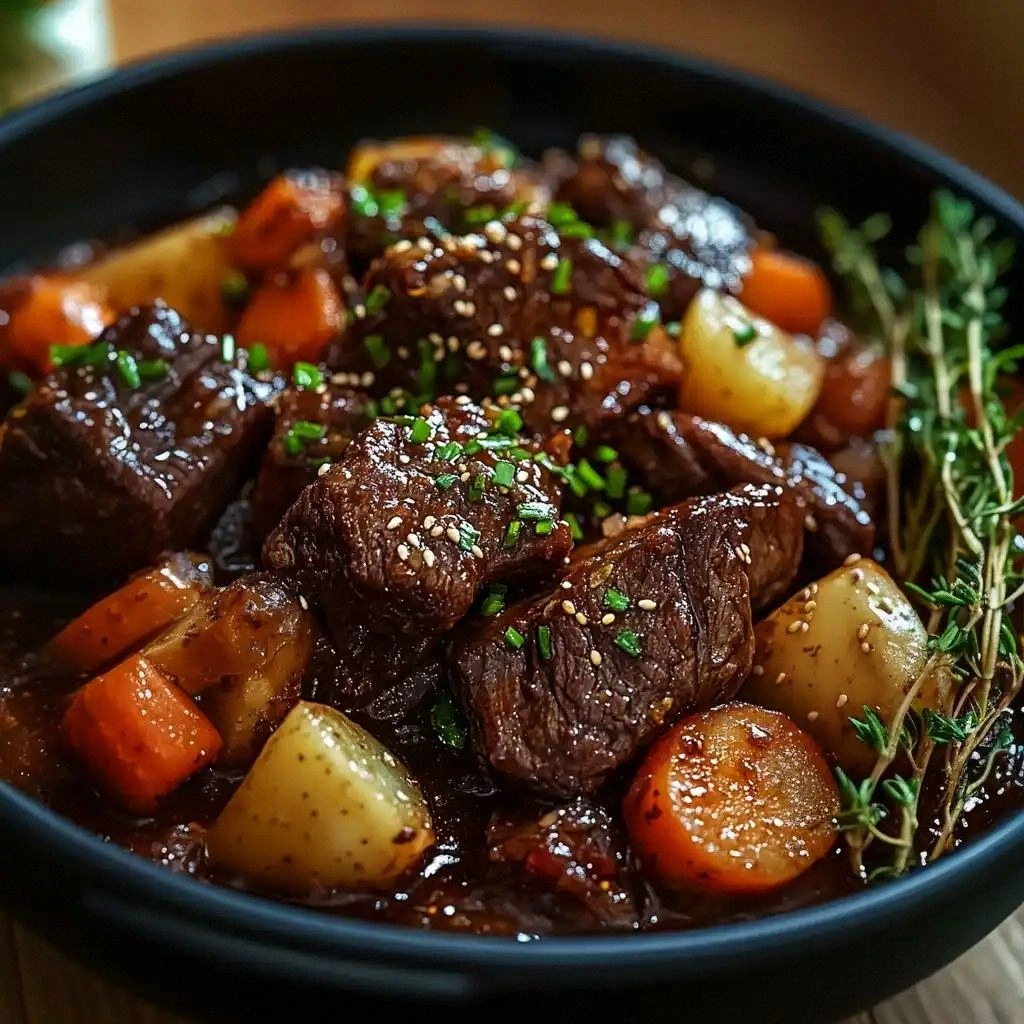
Picture this: a thick, juicy chuck roast, browned to a deep mahogany on all sides, bathed in a sauce that glistens like liquid gold. The mixture of gochujang, honey, and Korean pear creates a sweet‑spicy glaze that coats the meat like velvet, while the carrots and potatoes add a comforting, earthy counterpoint. Every bite delivers a symphony of flavors—umami, heat, sweetness, and a subtle tang from the vinegar—making each mouthful a revelation. The texture is a paradox: the exterior is caramelized and slightly crisp, while the interior melts in your mouth, releasing a cascade of juices that cling to your palate.
What makes this version stand out is not just the flavor profile but the technique that locks in moisture while building depth. I’ve spent years experimenting with slow‑cooked dishes, and this recipe is the culmination of those lessons. The key is to sear the meat first, then let the sauce reduce slowly, allowing the sugars to caramelize without burning. The addition of Korean pear or apple introduces a natural sweetness that balances the heat of the gochujang, a trick I discovered during a late‑night cooking session when I needed something to offset a particularly spicy batch.
I dare you to taste this and not go back for seconds. The first bite will have you reaching for more, and by the end, you’ll wonder how you ever made pot roast any other way. Stay with me here—this is worth it. Let me walk you through every single step, and by the end, you’ll wonder how you ever made it any other way.
What Makes This Version Stand Out
- Flavor: The sauce marries sweet, savory, and spicy notes into a harmonious glaze that coats the meat like velvet.
- Texture: A perfectly browned crust gives way to a melt‑in‑your‑mouth interior, thanks to a controlled sear and slow simmer.
- Simplicity: With fewer than a dozen ingredients, the recipe feels approachable while delivering restaurant‑level results.
- Uniqueness: The Korean pear or apple infusion is a secret weapon that sets this dish apart from standard pot roasts.
- Crowd‑pleaser: Family and friends rave about the bold flavors, and even skeptics become fans.
- Ingredient Quality: Using a high‑quality chuck roast and fresh aromatics ensures the dish shines.
- Cooking Method: The combination of searing, braising, and a finishing glaze creates layers of depth.
- Make‑Ahead Potential: The flavors continue to develop, making this dish perfect for meal prep or a week‑night dinner.
Inside the Ingredient List
The Flavor Base
The heart of this dish lies in the sauce. Soy sauce provides the umami backbone, while gochujang adds depth and a fiery kick that’s unmistakably Korean. Sesame oil elevates the aroma, giving the dish a nutty finish that lingers on the tongue. Without these three, you’d be missing the signature flavor that makes this pot roast unforgettable. The combination of sweet and spicy is a delicate balance; if you reduce the gochujang, the sauce becomes too sweet, and if you cut the honey, it loses its glossy sheen.
The Texture Crew
Carrots, potatoes, and onions form the comforting bulk of the dish. They absorb the sauce, becoming tender and flavorful while adding a satisfying bite. The optional Korean radish offers a crunchy contrast and a subtle peppery flavor that pairs beautifully with the sweetness of the pear. Skipping the vegetables would strip the dish of its heart, leaving the meat isolated in a thick sauce without the comforting body it needs.
The Unexpected Star
Korean pear—or apple if you’re on a budget—acts as the secret sweetener. Its natural sugars caramelize during cooking, creating a glaze that’s both sweet and sticky. The pear also contributes a subtle fruitiness that balances the heat of the gochujang. If you don’t have Korean pear, any crisp apple will do, but the flavor profile will shift slightly toward a more traditional Western apple sweetness.
The Final Flourish
Green onions and sesame seeds are the finishing touches that add brightness and a textural pop. The green onions bring a fresh, oniony snap that cuts through the richness, while the sesame seeds provide a nutty crunch. These final additions elevate the dish from comforting to celebratory. If you’re vegan, simply omit the sesame oil and replace it with a plant‑based alternative; the dish will still shine.
Everything's prepped? Good. Let's get into the real action...
The Method — Step by Step
- Trim excess fat from the chuck roast and pat it dry with paper towels. Season both sides liberally with salt and freshly ground black pepper. The salt will help form a crust; the pepper adds a subtle bite that complements the sweet sauce.
- Heat a large Dutch oven or heavy‑bottomed pot over medium‑high heat and add 3 tablespoons of sesame oil. Once the oil shimmers, place the roast in the pot and sear for about 4–5 minutes per side, until a deep brown crust forms. This caramelization is essential for depth of flavor.
- Remove the roast and set aside. In the same pot, add 3 minced garlic cloves and 1 inch of grated ginger. Sauté for 1 minute until fragrant, being careful not to burn them. The aromatics form the base of the sauce.
- Stir in ½ cup of soy sauce, 2 tablespoons of gochujang, and 2 tablespoons of honey (or brown sugar). Whisk until the gochujang dissolves completely. This mixture should thicken slightly and coat the back of a spoon.
- Pour in ½ cup of chopped Korean pear or apple, 1 tablespoon of rice vinegar, and 1 cup of water. Bring the mixture to a gentle simmer, scraping up any browned bits from the bottom of the pot. These fond bits are flavor gold.
- Return the seared roast to the pot, nestling it into the sauce. Add 3 sliced carrots, 2 diced potatoes, 1 sliced onion, and, if you like, 1 optional Korean radish sliced into rounds. Cover the pot and reduce the heat to low.
- Simmer uncovered for 2–2.5 hours, stirring occasionally. The meat should become fork‑tender and the vegetables should be soft and infused with the sauce. Check the liquid level every 30 minutes; add a splash of water if it evaporates too quickly.
- Once the roast is tender, remove it from the pot and let it rest for 10 minutes. Meanwhile, turn the heat to high and reduce the remaining liquid in the pot until it thickens to a glaze consistency. This final reduction intensifies the flavor and gives the roast a glossy finish.
- Slice the roast against the grain, drizzle the glaze over the slices, and garnish with sliced green onions and a sprinkle of toasted sesame seeds. Serve hot, ideally over steamed rice or with a side of kimchi for an authentic touch.
That's it—you did it. But hold on, I've got a few more tricks that'll take this to another level...
Insider Tricks for Flawless Results
The Temperature Rule Nobody Follows
Many people think that a high simmer is the secret to a tender roast, but the truth is low and slow wins the race. By maintaining a gentle simmer, the connective tissues in the chuck roast break down into gelatin, creating a silky mouthfeel. If you’re in a hurry, keep the heat low and cover the pot to trap steam; this will accelerate the breakdown without overcooking the exterior.
Why Your Nose Knows Best
As the roast simmers, the aroma will change from sharp to sweet. Trust your nose: when the smell is rich and the glaze has a caramelized sheen, the dish is ready. This sensory cue is more reliable than timing alone because the sauce’s thickness and color are direct indicators of flavor development.
The 5‑Minute Rest That Changes Everything
Letting the roast rest after cooking allows the juices to redistribute. If you slice immediately, the juices will spill onto the cutting board, leaving the meat dry. A brief 5‑minute rest is enough to lock in moisture and keep every bite succulent.
The Power of the Final Glaze
Reducing the sauce after removing the roast concentrates the flavors and creates a glossy coating that clings to the meat. If you skip this step, the roast will taste watery and lack depth. The glaze also gives the dish a professional finish that impresses even the most discerning palate.
The Secret to Crispy Edges
If you love a bit of crunch, leave the pot uncovered for the last 10 minutes of simmering. This allows the sauce to evaporate slightly, tightening the glaze and creating a caramelized crust on the roast’s surface. The result is a satisfying contrast between the tender interior and the crisp exterior.
Creative Twists and Variations
This recipe is a playground. Here are some of my favorite ways to switch things up:
Spicy Kimchi Twist
Add a cup of chopped kimchi during the last 30 minutes of simmering for an extra layer of umami and spice. The fermented flavors will deepen the sauce, giving the dish an authentic Korean edge.
Miso Marinade Variation
Replace soy sauce with 3 tablespoons of white miso paste for a richer, earthier base. Combine with a splash of mirin to balance the saltiness and create a slightly sweeter glaze.
Vegetarian Version
Swap the chuck roast for a hearty block of seared tofu or tempeh. Marinate the protein in the same sauce before browning to infuse maximum flavor.
Low‑Carb Edition
Omit the potatoes and carrots, and replace them with sliced zucchini and mushrooms. The dish becomes a low‑carb, protein‑rich main that still delivers the signature sauce.
Breakfast Take‑Away
Serve the sliced roast over a bed of fluffy scrambled eggs and toasted bread for a Korean‑inspired brunch. The savory sauce pairs beautifully with the eggs’ richness.
Holiday Holiday
Add a handful of dried shiitake mushrooms to the pot for a deeper, foresty flavor that’s perfect for holiday gatherings. The mushrooms also absorb the sauce, adding another dimension to the dish.
Storing and Bringing It Back to Life
Fridge Storage
Cool the pot roast completely, then transfer the meat and vegetables to an airtight container. Store in the refrigerator for up to 4 days. The sauce’s natural sugars will keep the roast moist.
Freezer Friendly
Wrap the roast tightly in plastic wrap and place it in a freezer‑proof bag. Freeze for up to 3 months. Thaw overnight in the refrigerator before reheating.
Best Reheating Method
Reheat in a saucepan over medium heat, adding a splash of water or broth to loosen the sauce. Let it simmer gently until heated through. A tiny splash of water before reheating will steam the dish back to its original succulence.