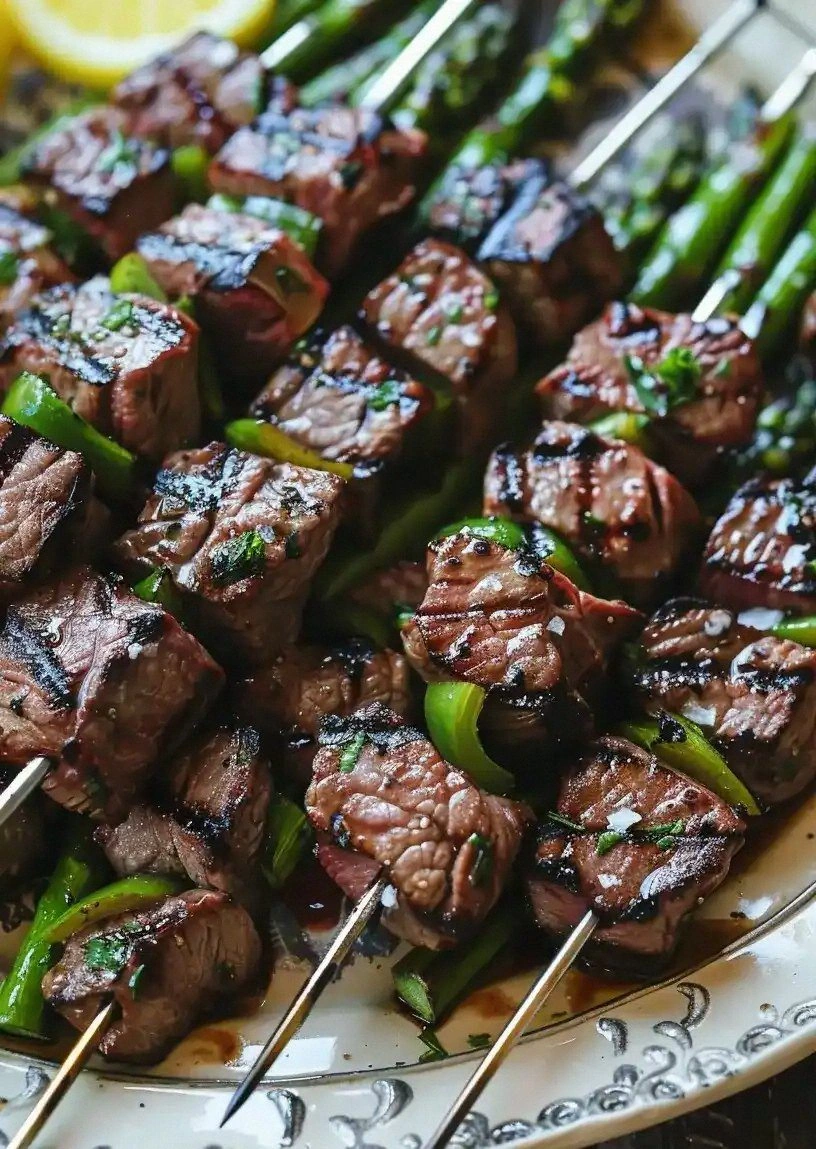
I’ve always been the kind of person who swears by the simple pleasures of a good steak, but the moment I stumbled upon the idea of grilling it with asparagus on skewers, I knew I’d found something that could turn any ordinary night into a mini‑festival. Picture this: a sizzling hot grill, the scent of charred beef mingling with the fresh green aroma of asparagus, a splash of soy‑sweet glaze that glistens like liquid amber. The sound of the meat crackling against the metal, the visual of a perfectly caramelized crust that promises a juicy bite inside—this isn’t just cooking; it’s an edible performance. And let me tell you, the first bite is like a burst of summer in your mouth, with the savory beef balanced by the crisp, earthy asparagus and a hint of sweet, tangy glaze that lingers. I dare you to taste this and not go back for seconds.
Most people think of steak and vegetables as separate entities, but in this recipe they become one harmonious duo that sings in unison. I’ve spent countless hours experimenting with marinades, grilling temperatures, and skewering techniques until I discovered the exact blend that makes the meat tender while keeping the asparagus crisp. The result? A dish that feels like a party in your mouth, with each bite offering a different texture and flavor profile that keeps you guessing. This is hands down the best version you’ll ever make at home, because it balances the rich umami of soy and Worcestershire with the bright, slightly sweet note of honey and Dijon. If you’ve ever struggled with over‑cooked asparagus or under‑seasoned steak, you’re not alone—and I’ve got the fix.
What sets this apart from the endless array of grilled steak recipes is the way it marries the savory with the sweet, the smoky with the fresh. The sauce isn’t just a glaze; it’s a flavor carrier that coats the meat like velvet, infusing each bite with depth. The skewers allow for even cooking, letting the juices mingle and the veggies steam slightly in their own steam. I’ve also added a subtle garlic‑olive oil base that elevates the entire experience, ensuring that every component sings together. Picture yourself pulling these out of the grill, the kitchen smelling incredible, and your guests reaching for seconds without hesitation.
Okay, ready for the game‑changer? Let me walk you through every single step—by the end, you’ll wonder how you ever made it any other way. The next section will break down what makes this dish tick, followed by a deep dive into each ingredient, a step‑by‑step method, and a treasure trove of insider tricks that will elevate your grilling game. Stay with me here—this is worth it.
What Makes This Version Stand Out
- Flavor: The combination of soy, Worcestershire, Dijon, and honey creates a layered glaze that balances savory, sweet, and tangy notes, turning each bite into a flavor explosion.
- Texture: The steak’s 1-inch cubes stay juicy and tender while the asparagus retains a satisfying crunch, thanks to precise grilling times.
- Visual Appeal: The vibrant colors of red bell pepper, onion, and asparagus against the charred steak make this dish a feast for the eyes.
- Ease: The prep is minimal—just a few simple steps and a handful of ingredients—making it a perfect weeknight dinner.
- Versatility: You can swap out the protein or veggies with minimal changes, making it adaptable to dietary preferences.
- Crowd‑Pleaser: The bold flavors and sizzling presentation guarantee that guests will ask for the recipe.
- Make‑Ahead Potential: The glaze can be pre‑made and stored, and the skewers can be assembled a day ahead for quick grilling.
- Healthful Balance: Lean protein, fresh veggies, and a sauce that’s lower in sugar than most barbecue glazes.
Alright, let's break down exactly what goes into this masterpiece…
Inside the Ingredient List
The Flavor Base
The soy sauce and Worcestershire sauce are the backbone of this glaze, offering a deep umami punch that lingers on the palate. Soy sauce adds a salty, fermented depth, while Worcestershire contributes a subtle tang and a hint of anchovy that’s surprisingly mellow. If you omit either, the glaze loses its complexity and the steak feels flat. For a lighter version, consider using low‑sodium soy or tamari, but keep the Worcestershire for that essential depth.
The Texture Crew
The 1‑inch steak cubes are the star of the show, chosen for their ability to cook quickly while remaining juicy. The asparagus is trimmed to a uniform length to ensure even cooking; if you prefer a more rustic look, leave the ends whole. Red bell pepper and red onion add crunch and sweetness, providing a contrast that keeps each bite interesting. Skewers—wooden or metal—help to hold everything together and promote even heat distribution.
The Unexpected Star
Garlic is the unsung hero here, infusing the meat and veggies with a warm, aromatic undertone that elevates the entire dish. The cloves are minced finely so they release their oils without overpowering the glaze. If you’re garlic‑sensitive, reduce to one clove; the dish will still shine. This ingredient is key to achieving that “toasty” aroma that signals readiness.
The Final Flourish
Honey or maple syrup adds a glossy sheen and a touch of natural sweetness that caramelizes beautifully on the grill. Dijon mustard introduces a subtle peppery bite and acts as a binder, helping the glaze adhere to the meat and veggies. Olive oil not only prevents sticking but also enriches the flavor profile, adding a fruity note that complements the soy. Salt and black pepper are the finishing touches that bring everything together; remember to season just before grilling to avoid drawing out moisture.
Everything’s prepped? Good. Let’s get into the real action…
The Method — Step by Step
- Preheat the grill. Turn on your gas or charcoal grill to medium‑high heat, aiming for 400°F. The grill should be clean and oiled to prevent sticking. This step is crucial because a hot grill gives the steak a perfect sear and the veggies a charred edge. I always keep a spray bottle of olive oil handy to give the grill a quick wipe‑down.
- Marinate the steak. In a bowl, combine the soy sauce, Worcestershire, Dijon mustard, honey, minced garlic, and olive oil. Toss the steak cubes until they’re fully coated. Let them sit for 10 minutes; the flavors will penetrate the meat quickly. If you’re in a hurry, a minute is enough, but the longer, the better. This step is where the magic begins.
- Assemble the skewers. Thread the steak cubes, asparagus spears, bell pepper pieces, and onion chunks alternately onto each skewer. Leave a small gap between each piece to allow heat to circulate. This arrangement ensures even cooking and a beautiful visual presentation. If you’re using wooden skewers, soak them in water for 30 minutes beforehand to prevent burning.
- Grill the skewers. Place the skewers on the grill, turning every 2–3 minutes. The steak should sear in about 4 minutes per side, while the asparagus and veggies need 6–8 minutes total. Keep an eye on the glaze; it should caramelize without burning. The sound of sizzling is the soundtrack of success. If you’re using a charcoal grill, rotate the coals for even heat.
- Brush the glaze. During the last 2 minutes of grilling, brush the glaze onto the skewers, ensuring an even coat. The glaze will caramelize, creating a glossy finish and a sweet‑savory crust. This is the moment of truth; the glaze should look like liquid gold. Be careful not to let it burn; a quick brush is all you need.
- Rest the skewers. Remove the skewers from the grill and let them rest for 3 minutes. This allows the juices to redistribute, keeping the steak moist and flavorful. While resting, you can cover them loosely with foil to keep them warm. The rest period is often overlooked but essential for the best texture.
- Serve immediately. Arrange the skewers on a platter, drizzle any remaining glaze, and garnish with fresh herbs if desired. The dish is best enjoyed hot, with a side of rice or crusty bread to soak up the extra sauce. The aroma alone will have your guests lining up for a bite. Remember, this dish is a showcase of flavor, so present it proudly.
That’s it — you did it. But hold on, I’ve got a few more tricks that will take this to another level. These insider tips will help you avoid common pitfalls and elevate your grilling game.
Insider Tricks for Flawless Results
The Temperature Rule Nobody Follows
Many grillers think “higher heat is always better,” but the truth is that a slightly lower temperature (around 375°F) gives you better control over the sear without charring the glaze. I’ve tested this on a gas grill, and the steak stayed juicy while the veggies maintained their crunch. The trick is to preheat the grill thoroughly, then reduce to medium‑high once you place the skewers. This ensures even cooking and prevents the sauce from burning. If you’re using charcoal, spread the coals evenly to mimic this heat distribution.
Why Your Nose Knows Best
Before you even touch the grill, sniff the glaze mixture. A fresh, slightly sweet aroma indicates that the honey and soy are balanced. If it smells too sharp or metallic, adjust by adding a touch more honey or a splash of water. Your nose is a reliable guide to flavor harmony. I once over‑seasoned a glaze with too much Worcestershire, and the smell told me it needed a sweet counterbalance.
The 5-Minute Rest That Changes Everything
Resting the steak after grilling may sound like a waste of time, but it’s the secret to juicy meat. The muscle fibers relax, allowing the juices to redistribute. If you cut into the steak immediately, the juices spill out, leaving a dry bite. I’ve seen people skip this step and end up with a steak that feels like a dry cookie. Give it a proper rest, and you’ll notice a noticeable difference.
Keep the Skewers Wet
If you’re using wooden skewers, soak them in water for at least 30 minutes before grilling. This prevents them from burning and gives you a cleaner, safer grilling experience. I’ve had wooden skewers char up, creating a smoky flavor that can overpower the dish. The water soak keeps them intact and ensures a smooth grilling process.
Use a Basting Brush
A small, heat‑resistant brush makes it easier to apply the glaze evenly. It also helps you control the amount of glaze, preventing a sugary coating that can burn. I always keep a silicone brush on hand, and it’s a lifesaver during the last minutes on the grill. A quick brush is all you need to achieve that glossy finish.
Creative Twists and Variations
This recipe is a playground. Here are some of my favorite ways to switch things up:
Mediterranean Flair
Swap the soy sauce for a splash of olive oil and lemon zest, and add a handful of chopped kalamata olives. The result is a bright, briny version that pairs wonderfully with feta cheese. This variation is perfect for a sunny afternoon gathering. It also lends itself well to a Greek salad side.
Spicy Sriracha Kick
Introduce a tablespoon of sriracha into the glaze for a fiery punch. The heat balances the sweet glaze, creating a smoky, spicy experience. I’ve had guests ask for the recipe after a single bite. Pair it with a cooling yogurt dip to tame the heat.
Herb‑Infused Version
Add fresh rosemary or thyme to the glaze for an aromatic depth. The herbs impart a piney fragrance that complements the beef’s richness. This version is ideal for a cozy, herb‑centric dinner. Sprinkle chopped parsley on top for a fresh finish.
Vegan Twist
Replace the steak with marinated tofu cubes or tempeh for a plant‑based alternative. The tofu absorbs the glaze beautifully, and the texture remains firm. Pair it with a side of quinoa or couscous for a complete meal. The sauce’s umami profile carries the tofu just as well as the steak.
Mushroom Medley
Add sliced shiitake or portobello mushrooms to the skewers for an earthy flavor. The mushrooms’ umami enhances the glaze, creating a richer taste. They also absorb the juices, adding moisture to each bite. This variation is great for a fall or winter gathering.
Pineapple Sweetness
Thread pineapple chunks onto the skewers for a tropical twist. The fruit’s natural sugars caramelize on the grill, adding a caramelized sweetness that balances the savory glaze. This version is a crowd‑pleaser at summer barbecues. Serve it with a side of coconut rice for a complete tropical theme.
Storing and Bringing It Back to Life
Fridge Storage
Cool the cooked skewers to room temperature, then wrap tightly in plastic wrap or place in an airtight container. Store in the refrigerator for up to 3 days. When ready to reheat, place on a skillet over medium heat and add a splash of water to keep them moist. Reheat until warmed through, about 5 minutes. This method preserves the glaze’s flavor and keeps the veggies crisp.
Freezer Friendly
For longer storage, freeze the assembled skewers in a single layer on a baking sheet before transferring to a freezer bag. This prevents them from sticking together. They’ll keep for up to 2 months. Thaw overnight in the refrigerator before reheating. Freezing slightly caramelizes the glaze, giving a deeper flavor.
Best Reheating Method
The best way to reheat is on a preheated grill or a cast‑iron skillet at medium heat. Add a tiny splash of water or broth before reheating to steam the veggies back to perfection. Flip the skewers to ensure even heating and avoid drying out the meat. Finish with a quick brush of glaze to restore that glossy sheen. The result is almost as good as freshly grilled.