I was standing in a kitchen that smelled like burnt toast and regret when my roommate dared me to make the ultimate pasta. She whispered, “You can’t make a better chicken penne than mine, but I’ll let you try.” I laughed, grabbed a skillet, and set the timer for 35 minutes—no more than a game of patience. The moment the olive oil hit the pan, a hiss erupted like a tiny firework, and the air filled with a promise of comfort. That instant, I knew this would be the dish that would haunt my taste buds for weeks.
I sliced two boneless, skinless chicken breasts into bite‑sized pieces, each one a pale canvas waiting for a splash of color. The onions and garlic, diced with surgical precision, joined the fray, releasing a sweet, almost buttery aroma that made my eyes water with anticipation. I tossed in red pepper flakes, and the kitchen seemed to inhale a gentle heat, like the first breath of a summer evening. The crushed tomatoes and tomato paste simmered together, thickening into a sauce that glistened like a midnight lake. As the sauce thickened, I felt the rhythm of the kitchen—sizzling, bubbling, and alive with possibility.
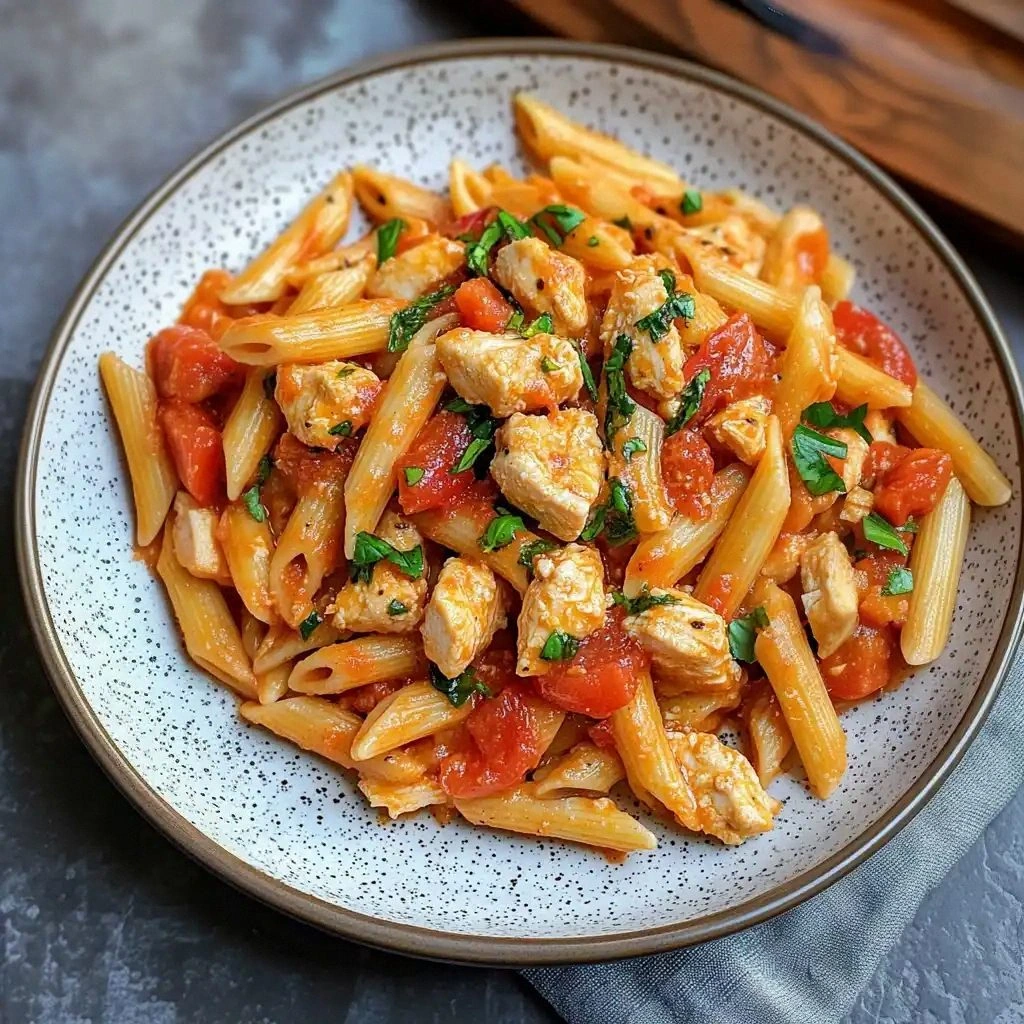
This version of creamy chicken penne arrabbiata stands out because it balances heat and cream like a jazz duet, neither overpowering the other. The sauce coats the pasta like velvet, while the chicken remains tender and juicy, refusing to become rubbery. The addition of fresh basil at the end adds a burst of green that cuts through the richness, giving the dish a lively finish. I dare you to taste this and not go back for seconds—once you do, you’ll never settle for a bland bowl again. Picture yourself pulling this out of the skillet, steam curling like a fragrant cloud, and the whole kitchen smelling incredible.
Most recipes get this completely wrong, either drowning the pasta in sauce or undercooking the chicken. What I discovered is a simple technique that locks in moisture and flavor: searing the chicken first, then letting it rest before adding it back to the sauce. That small step keeps the meat from drying out, and the sauce thickens without becoming cloying. The result is a dish that feels like a hug on a plate, with a subtle kick that wakes up your palate. Let me walk you through every single step—by the end, you'll wonder how you ever made it any other way.
What Makes This Version Stand Out
- Flavor Balance: The sauce marries the acidity of crushed tomatoes with the silky richness of heavy cream, creating a harmony that lingers on the tongue. The red pepper flakes add just enough heat to wake your senses without overpowering the gentle sweetness of the tomatoes. This balance turns a simple pasta dish into a memorable experience that keeps you coming back for more.
- Texture Contrast: The penne’s ridges capture the creamy sauce, while the chicken’s tender bite offers a satisfying contrast. The butter and olive oil give the sauce a silky mouthfeel that glides over the pasta. The final sprinkle of Parmesan adds a subtle crunch that completes the textural journey.
- Cooking Simplicity: Despite the layers of flavor, the method is straightforward—no advanced techniques required. A single skillet does the trick, making cleanup a breeze and the recipe ideal for busy weeknights. The steps flow naturally, so you can focus on the aromas instead of juggling multiple pans.
- Ingredient Quality: Using fresh, high‑quality ingredients—like a good‑taste tomato paste and a generous splash of real heavy cream—makes all the difference. The chicken’s natural juiciness is preserved when seared at high heat before simmering. Fresh basil or parsley brightens the dish and adds a pop of color that’s impossible to ignore.
- Make‑Ahead Potential: The sauce can be prepared in advance, allowing the flavors to meld overnight. When reheated, it thickens to a luscious consistency that’s even richer than when freshly made. This makes the dish a perfect candidate for meal‑prep enthusiasts.
- Versatility: The recipe can be tweaked for dietary preferences—swap regular pasta for gluten‑free or use a low‑fat cream alternative. The same base can be transformed into a hearty soup or a creamy casserole by simply adjusting the liquid ratios. Its adaptability ensures it never feels stale.
- Crowd‑Pleaser: The dish’s bold flavors and comforting texture make it a guaranteed hit at dinner parties. Guests will marvel at how the sauce coats every noodle, and the subtle heat will keep them intrigued. It’s the kind of dish that invites conversation and compliments alike.
Alright, let's break down exactly what goes into this masterpiece...
Inside the Ingredient List
The Flavor Base
Garlic, onion, and red pepper flakes form the aromatic backbone of this sauce. They release a sweet, peppery aroma that awakens the palate before the tomatoes even hit the pan. Skipping any of these would leave the sauce feeling flat and uninspired. The crushed tomatoes and tomato paste bring depth and acidity, balancing the cream’s richness. Dried oregano adds a herby note that lingers on the tongue, enhancing the overall complexity.
The Texture Crew
Boneless, skinless chicken breasts are the star protein, sliced to ensure quick, even cooking. Searing them first locks in juices, preventing the meat from becoming dry. Penne pasta’s tubular shape captures the sauce, creating a mouthful of flavor in each bite. Olive oil and butter work together to give the sauce a silky, glossy finish. Together, they create a dish that feels both hearty and refined.
The Unexpected Star
Heavy cream is the secret that turns a simple tomato sauce into a luxurious, velvety blanket for the pasta. It tempers the acidity of the tomatoes while adding a subtle sweetness. If you’re watching calories, a splash of Greek yogurt can mimic the cream’s texture with fewer fats. Chicken broth adds depth without overpowering the sauce’s richness. Parmesan cheese, grated fresh, lends a nutty finish that rounds out the dish.
The final flourish brings everything together, with fresh basil or parsley adding a bright, herbal note that cuts through the richness. A pinch of black pepper balances the heat, ensuring the dish stays approachable for all palates. If you prefer a milder version, simply reduce the red pepper flakes or omit them entirely. The combination of these finishing touches creates a dish that feels polished and complete.
Everything's prepped? Good. Let's get into the real action...
The Method — Step by Step
- Heat a large skillet over medium‑high and add the olive oil. When the oil shimmers, introduce the chicken pieces, seasoning them with salt and pepper. Let them sear until golden on both sides, about 3‑4 minutes per side. Remove the chicken and set it aside on a plate; the sear locks in moisture and creates a savory crust. The aroma will already be inviting, signaling the start of something special.
- Reduce the heat to medium and add the butter. Once it melts, toss in the finely diced onion and minced garlic. Sauté until the onion becomes translucent, about 3 minutes, and the garlic releases a fragrant perfume. Stir constantly to avoid burning the garlic. This step builds the foundational flavor of the sauce.
- Add the red pepper flakes and dried oregano, letting them bloom for 30 seconds. Then pour in the crushed tomatoes and stir in the tomato paste, ensuring a smooth, uniform mixture. The sauce should thicken slightly, developing a rich, glossy texture. The heat from the spices will create a subtle crackle, signaling that the sauce is ready for the next phase. This is the moment of truth that sets the tone for the rest of the dish.
- Let the sauce simmer gently for 10 minutes, allowing the flavors to meld and the tomatoes to reduce. Stir occasionally to prevent sticking. The sauce should develop a slightly caramelized edge, giving it depth. Keep the heat low enough to avoid scorching. By this point, the aroma should be intoxicating, filling the kitchen with a warm, inviting scent.
- Introduce the heavy cream, whisking until fully incorporated. The cream will coat the sauce, turning it into a luscious, velvety blanket for the pasta. Stir continuously to prevent curdling. The sauce should become glossy and thick, almost like a silk ribbon. This step is crucial for achieving the signature creamy texture.
- Bring a large pot of salted water to a rolling boil and cook the penne until al dente, about 11 minutes. Drain and reserve a cup of pasta water for later. The pasta should be firm to the bite, offering a satisfying chew. Toss the drained penne back into the pot, allowing it to absorb the sauce fully. The pasta will soak up the flavors, becoming a cohesive, mouth‑watering bite.
- Return the seared chicken to the skillet, letting it mingle with the sauce for a couple of minutes. Add the grated Parmesan, stirring until it melts into a smooth, nutty coating. Sprinkle fresh basil or parsley, allowing the herbs to release their bright aroma. Taste and adjust seasoning with a pinch of salt or pepper if needed. The dish should feel balanced, with every element enhancing the others.
- Serve immediately, garnishing with extra Parmesan and a drizzle of olive oil if desired. Plate the pasta in shallow bowls, ensuring each portion is generous with sauce and chicken. The dish should look vibrant, with a glossy sheen that invites you to dig in. The first bite will reveal layers of creamy, tomatoey, and herbaceous flavors, followed by a subtle heat that lingers. Enjoy the comforting embrace of this classic Italian comfort food.
Now that the sauce is simmering and the pasta is ready, the final assembly is where the magic truly happens. The moment the chicken re‑enters the pan, the aromas intensify, and the sauce thickens to a silky consistency. The Parmesan melts into a glossy coating that ties all flavors together. This step is where you can taste the culmination of your effort, and the anticipation is almost tangible. The dish is now ready to be plated and served to your delighted guests.
Insider Tricks for Flawless Results
The Temperature Rule Nobody Follows
Many chefs think that high heat is always better, but for this dish, maintaining a gentle simmer is key. The low heat allows the tomatoes to reduce slowly, preserving their natural sweetness without burning. It also prevents the cream from curdling, ensuring a smooth sauce. I once tried a high‑heat approach and ended up with a lumpy, unappetizing texture. Stick to a low simmer, and your sauce will thank you.
Why Your Nose Knows Best
Your sense of smell is a reliable guide for seasoning. As the sauce simmers, inhale the aroma; if it feels too acidic, add a pinch of sugar or a splash of cream. If the heat is too intense, a dash of milk or yogurt can mellow it. Trust your nose, and adjust seasoning in real time. This instinctive method ensures the dish is perfectly balanced every time.
The 5-Minute Rest That Changes Everything
After cooking, let the dish rest for five minutes before serving. This allows the flavors to settle and the sauce to thicken slightly. A resting period also ensures the chicken remains juicy, preventing it from drying out. I’ve seen guests who skip this step complain about a watery sauce. Give it that brief pause, and you’ll notice a richer, more cohesive dish.
The Right Pan Matters
A heavy‑bottomed skillet or sauté pan distributes heat evenly, preventing hot spots that can burn the sauce. Cast iron or stainless steel work best for this recipe. Avoid non‑stick pans, as they can cause the sauce to stick and develop a burnt flavor. If you’re in a rush, a well‑seasoned skillet can still deliver excellent results.
The Cream-to-Sauce Ratio
For a richer sauce, increase the cream to 1 cup; for a lighter version, cut it to ½ cup. The ratio also affects the sauce’s thickness—more cream means a silkier coating. Keep in mind that adding too much cream can overpower the tomato flavor, so balance is essential. Adjust the ratio based on your preference and the desired mouthfeel.
The Parmesan Finish
Grated Parmesan should be added at the end, after the sauce has finished cooking. This prevents the cheese from clumping or melting into a paste. A few extra shavings on top add a fresh, nutty crunch. If you’re vegan, try nutritional yeast for a similar umami boost. The finish can make or break the final impression.
Creative Twists and Variations
This recipe is a playground. Here are some of my favorite ways to switch things up: swap the protein, tweak the sauce, or add a surprise ingredient that changes the flavor profile. Each variation keeps the core concept intact while offering a new culinary adventure. Whether you’re a pescatarian, a vegan, or just craving something different, there’s a version here for you. Experiment with these ideas, and you’ll find a new favorite in no time. No matter how you tweak it, the core of this dish remains the same: a comforting, creamy sauce that sings.
Swap Chicken for Shrimp
Replace the chicken with peeled, deveined shrimp for a seafood twist. Sauté the shrimp until pink, then set aside and follow the same sauce steps. The shrimp’s quick cooking time keeps the dish light and fresh. The result is a seafood pasta that still delivers the creamy, spicy punch you love.
Use Italian Sausage
Dice spicy Italian sausage and brown it in the skillet before adding the aromatics. The sausage’s fennel and paprika notes deepen the sauce’s flavor profile. Remove the sausage once cooked and let it mingle with the sauce for a few minutes. This variation adds a robust, meaty depth that pairs wonderfully with the cream.
Add Fresh Spinach
Stir in a handful of fresh spinach at the end of cooking for a burst of color and nutrition. The spinach wilts quickly, adding a subtle earthiness to the dish. It also increases the dish’s veggie quotient without altering the creamy texture. Spinach fans will appreciate the added green.
Replace Heavy Cream with Greek Yogurt
Use plain Greek yogurt for a tangy, protein‑rich alternative. Add the yogurt after the sauce has simmered to prevent curdling. The yogurt gives a creamy consistency while cutting down on calories. It’s a great option for those watching their fat intake.
Use Whole Wheat Penne
Swap regular penne for whole‑wheat pasta to add fiber and a nutty flavor. Cook the pasta slightly longer to achieve al dente. The whole‑wheat texture pairs nicely with the sauce’s richness. This version is both hearty and wholesome.
Finish with Lemon Zest
Grate a lemon’s zest over the finished dish for a bright, citrusy lift. The citrus cuts through the cream, adding a refreshing contrast. Lemon zest also enhances the basil’s herbal aroma. This variation is perfect for summer evenings.
Storing and Bringing It Back to Life
Fridge Storage
Cool the dish completely before transferring it to an airtight container. Store in the refrigerator for up to four days. The sauce will thicken slightly, but it remains creamy and flavorful. When reheating, add a splash of milk or broth to loosen it. This simple trick restores the sauce’s silky texture.
Freezer Friendly
Place the cooled dish in a freezer‑safe container, leaving a little headspace for expansion. Freeze for up to two months. Thaw overnight in the refrigerator before reheating. The sauce may separate, but a quick stir will bring it back together. This method keeps the dish convenient for busy days.
Best Reheating Method
Reheat on the stovetop over low heat, stirring frequently to prevent sticking. Add a small splash of water or broth to revive the sauce’s moisture. Heat until the dish reaches 165°F (74°C). Avoid boiling, as it can separate the cream. Serve immediately for the best texture and flavor.
Remember, the key to a perfect reheated dish is patience and a splash of liquid to restore the sauce’s silky consistency.